You must have routine sanitation based upon potential hazards, food processing capacity, allergen concerns, and regulatory checks, combined with documented records demonstrating HACCP compliance, regulatory audits, and public health standards. The following sections describe critical cleaning system elements.
Main Points
- Food safety cleaning technicians from Brampton service restaurants, grocery departments, commissaries, warehouses, bakeries, schools, mobile vendors, and allergen-sensitive operations.
- Cross-contamination elimination is ensured by sanitizing high-touch surfaces, food-contact equipment, kitchens, floors, drains, restrooms, and storage areas with sectional methods.
- Certified contractors verify approved sanitizer dilution, suitability, and contact time, then log completion with swabs, audits, and corrective-action records.
- Hazard, production rate, transitions, incidents, and requirements should shape sanitation plans, with daily, recurring, and seasonal operations assigned by area.
- Protection, coded implements, HACCP, sanitation competency, WHMIS training, endorsements, and audit-ready hygiene files are vital vendor traits.
Which Brampton Venues Need Food Safety Cleaning?
Food safety cleaning is essential for any Brampton facility that handles, maintains, prepares, packages, or offers food. Apply it to your facility if it comes under health inspections, food codes, or HACCP requirements. This includes food service venues, employee dining, supply facilities, retail sections, butcheries, seafood counters, retail shops, and facility kitchens.
You'll equally need compliant food safety cleaning in storage centers, processing facilities, refrigerated warehouses, bakery retailers, school nutrition programs, event halls, and delivery centers. Portable business models count as well, such as catering trucks, festival vendors, and pop-up food booths. Should your workers handle raw materials, divide prepared dishes, warm finished meals, or maintain allergen storage, your location requires documented cleaning protocols. In Brampton, hygiene continues to be compulsory; it constitutes lawful, operational, and customer protection standards.
What Do Brampton Cleaning Experts Clean?
You need skilled cleaning experts who disinfect high-touch surfaces, kitchen spaces, flooring, and bathrooms to ensure compliance with food safety and health standards. These areas are targeted due to their high cross-contamination potential, slip and fall dangers, and regulatory breaches.
By understanding their service scope, you can make sure your facility's cleaning procedures meet compliance standards.
High-Touch Surface Sanitizing
set how regularly each area is disinfected
By replacing towels, using sequential processes, and organizing cleaning tools by section, you ensure a measurable, defensible, and compliance-ready disinfection plan.
Food Prep Areas, Flooring, and Sanitary Facilities
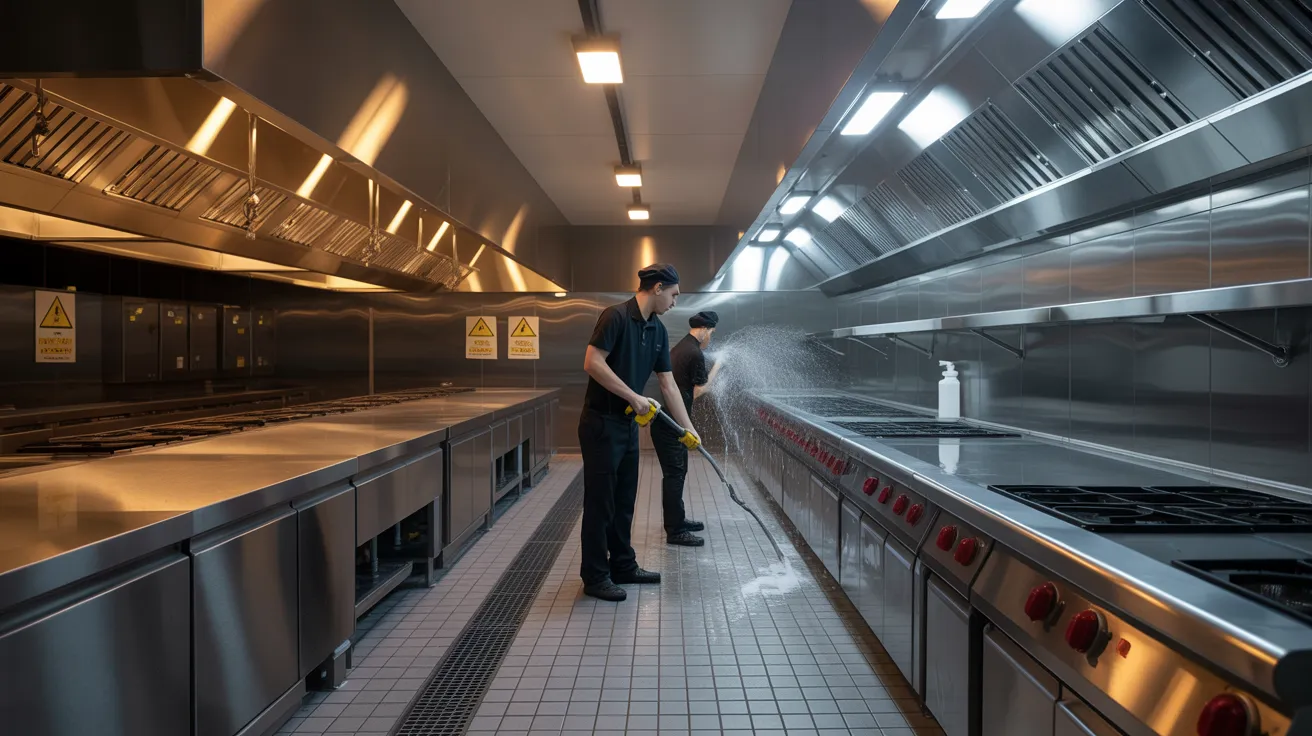
Brampton cleaning professionals will handle kitchens, floors, and restrooms since each space presents separate hygiene concerns, injury, and public health challenges. In industrial kitchens, you need grease removal from cooking stations, appliance surfaces, drain systems, preparation areas, and backsplashes to minimize contamination and pest pressure.
Professional floor care with documentation is also included. is likewise provided as part of the service.
In restrooms, cleaners disinfect touchpoints, fixtures, partitions, dispensers, and waste containers then restock supplies and control odours. They also maintain restaurant cleaning supply rooms where product storage, sink cleanliness, and drain systems impact daily sanitation standards and worker protection.
Food Safety Cleaning Significance for Brampton Businesses
To comply with regulatory mandates and pass inspections, Brampton facilities must follow food-safe cleaning standards. You also minimize cross-contamination by cleaning and sanitizing food-contact surfaces, equipment, and high-touch areas correctly. Most importantly, you help protect public health by lowering the risk of foodborne illness in your facility.
Food Safety Regulations
Brampton food businesses must comply with strict public health standards, so hygiene maintenance is critical to adhering to health codes, ensuring the safety of customers, and sidestepping penalties. You must maintain hygienic food handling zones, verifiable cleaning logs, safe chemical management, and verifiable staff procedures that correspond to municipal and provincial inspection expectations.
During inspections of your operation, officials evaluate if your sanitation system ensures secure product handling, machinery hygiene, garbage disposal, and restroom sanitation.
Cross-Contamination Prevention
Meeting health code standards also depends on your ability to prevent cross-contamination during daily food handling and cleaning. You must keep raw items away from prepared dishes, sanitize prep surfaces between tasks, and store chemicals away from food-contact items. Established guidelines minimize contamination chances and support consistent compliance during inspections.
Implementing allergen separation helps ensure major allergens don't touch shared surfaces, containers, or equipment. Deploy dedicated cutting boards, color-coded tools, and strict utensil labeling so staff don't mix items during preparation or service. Enforce hand hygiene following raw meat, seafood, eggs, or allergen-containing products. Refresh cleaning cloths often, and validate disinfectant levels using test strips. When you train staff to follow these controls per shift, you establish a more hygienic, safer workplace that meets Brampton's food safety expectations daily.
Community Health Safety
If food safety cleaning visit now declines, you don't merely face potential inspection issues—you amplify the risk of pathogenic contamination affecting customers, staff, and the broader Brampton region. You also weaken your role in safeguarding community wellness, especially in busy food facilities where contamination can spread quickly through surfaces, equipment, and touchpoints.
You need cleaning protocols that remove contaminants, disinfect appropriately, and validate outcomes. This involves maintaining contact periods, using authorized sanitizers, logging schedules, and coaching employees to satisfy regulatory requirements. These measures prevent pathogen control by decreasing microbial counts before contaminating food or hands. Throughout Brampton, effective sanitation safeguards susceptible populations, minimizes disease potential, and demonstrates accountability. When you follow proper protocols, you exceed regulations—you lower hazards and facilitate secure food handling throughout the area.
In What Ways Does Cleaning Help Achieve Food Safety Compliance?
Maintaining strict sanitation practices promotes food safety compliance by decreasing contamination threats, preventing pathogen multiplication, and keeping your facility meeting sanitation requirements under HACCP-based programs and public health regulations. You verify that food-handling surfaces appear visibly clean and microbiologically controlled, supporting documented preventive controls and inspection readiness.
Cleaning programs additionally bolster allergen mitigation by eliminating residues that can trigger undeclared allergen exposure.
How Ought You Plan Commercial Cleaning Work?
gather harmful substances. Boost frequency
Drain systems, vents, storage racks, and hard-to-reach zones require every week or every month service, informed by inspection results and sanitation documentation.
How Do You Choose Brampton Cleaning Experts?
Start by screening providers against food sanitation standards, not cost only. You should verify that each company understands CFIA, public health, and HACCP compliance standards relevant to your facility. Ask for proof of insurance, WHMIS compliance, documented staff training, and supervision practices. Review whether technicians understand cross-contamination risks, chemical handling, and traceable sanitation records.
Additionally, you need to evaluate service dependability and accountability. Obtain references from food facilities in Brampton, then review service speed, corrective-action procedures, and communication practices. Verify the company conducts supplier reviews and can deliver inspection-ready documentation when inspectors or external parties need proof. Verify equipment is maintained, colour-coded tools are applied correctly, and site-specific hazards are identified. A qualified provider protects compliance, product integrity, and your brand reputation.
Which elements are part of a hygiene cleaning program?
Create a written plan that defines every sanitation task, standard, and responsibility prior to beginning production. You should document cleaning frequencies, approved chemicals, dilution rates, contact times, tools, and verification methods for each zone, surface, and piece of equipment. Be sure to include pre-operational inspections, corrective actions, and employee training requirements.
Your plan should also address cross-contamination controls, waste handling, pest-prevention measures, and documented schedules for restrooms, drains, floors, and food-contact areas. Detail how you'll separate raw and ready-to-eat processes, facilitate ingredient tracking, and ensure accurate allergen labeling through validated cleaning between product changes. You should set accountability, maintain signed records, and review results against regulatory standards, HACCP controls, and customer requirements. When gaps appear, modify procedures immediately and instruct staff.
Commonly Asked Inquiries
Will sanitation providers manage overnight shifts at Brampton facilities?
If you manage regulated spaces, you'll also require records that enable inspections and maintain assurance.
Do sanitation professionals provide hazard containment solutions?
Yes, you can locate Brampton cleaning professionals providing hazard containment options. They manage contamination, evaluate risks, isolate contamination, and begin swift decontamination to reduce risk and avoid operational impact. You should confirm timeframes, certifications, safety protocols, and waste procedures. If your facility must adhere to regulations, select a service that tracks incidents, follows procedures, and ensures audit compliance.
Will eco-friendly disinfectants clean safely food-handling equipment?
Absolutely, eco-friendly disinfectants can be secure for food-contact surfaces when you pick solutions certified for food use and regulatory compliant. You must validate application timing, mixing proportions, and rinse protocols ahead of deployment. Plant based formulas minimize chemical hazards, though you require confirmation of performance against target microorganisms. For ensuring residue-free conditions, follow precise manufacturer instructions and confirm your cleaning agent meets applicable food industry sanitation standards.
Can cleaning plans be customized for production fluctuations?
Absolutely, cleaning plans can be customized for seasonal variations. Adjust frequencies, personnel, chemicals, and confirmation procedures to fit seasonal patterns while preserving regulatory compliance. Decrease production downtime through timing sanitization surrounding changeovers, peak seasons, and equipment use patterns. Additionally, update SSOPs, employee training, and environmental monitoring to account for periodic risks, emerging allergens, or increased soiling. Frequent reviews maintain the plan current.
Do professional cleaning services train staff on hygiene standards?
Certainly, professional cleaning experts coach your employees on sanitation best practices. You secure employee development on proper chemical use, contact times, contamination control, machine disassembly, and documentation procedures. They generally coordinate instruction with HACCP, GMP, and CFIA or local public health standards. Many also run sanitation audits to check standards, identify gaps, and strengthen corrective measures. This helps you maintain consistent procedures, satisfy audits, and reduce food safety risks every day.
Conclusion
When you work with Brampton food safety and commercial cleaning specialists, you aren't merely cleaning—you maintain your facility audit-prepared and your protocols compliant. From kitchens to processing floors, every clean surface and maintained area minimizes unwelcome guests and prevent costly setbacks. By scheduling service at the right intervals and adhering to a detailed cleaning schedule, you safeguard staff, patrons, and your brand image. In a strict regulatory setting, clean spaces aren't optional—they're part of doing business right.